

The speed and completeness of healing from musculoskeletal injuries depends not only on the severity of the injury and the quality of initial management, but on the patient's underlying biological environment — hormonal status, nutritional sufficiency, inflammatory burden, and tissue repair capacity.
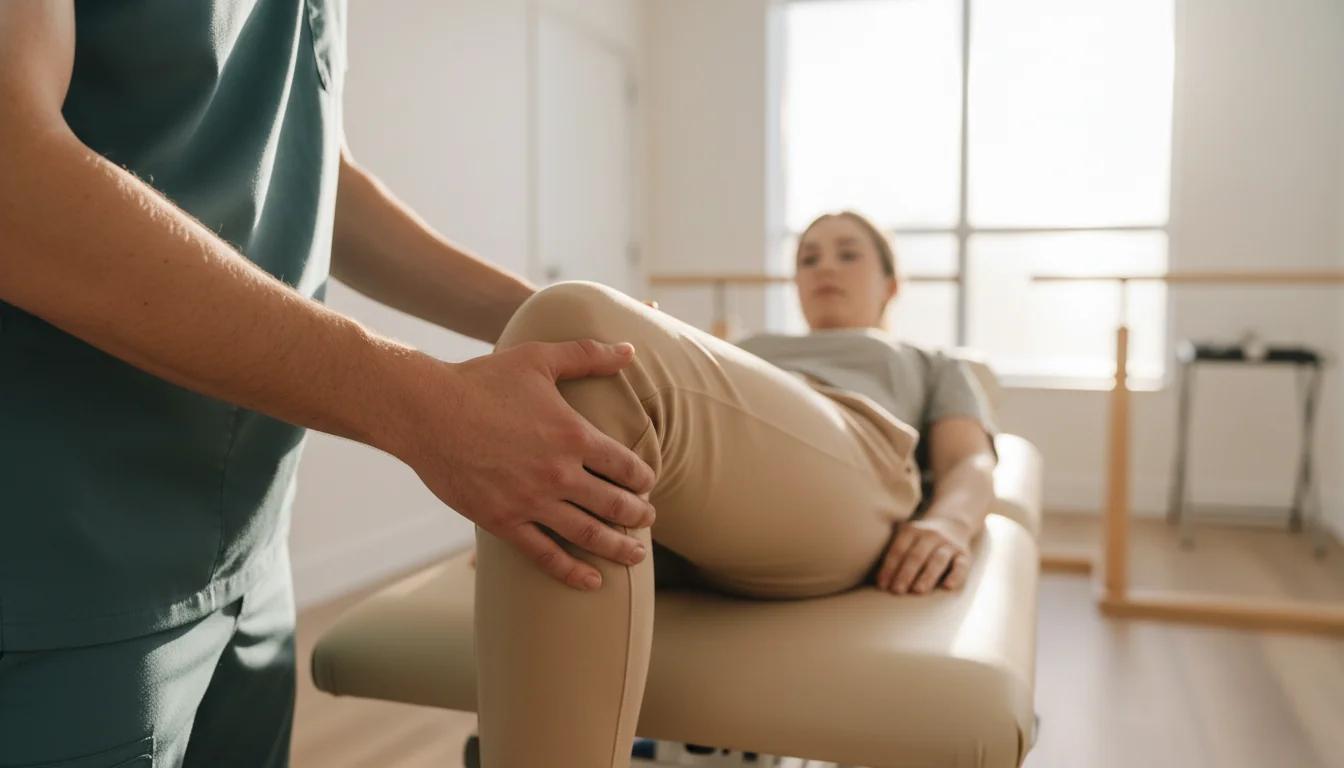
Injury Repair: Medical Protocols to Support Sports Injury Recovery
The speed and completeness of healing from musculoskeletal injuries depends not only on the severity of the injury and the quality of initial management, but on the patient's underlying biological environment — hormonal status, nutritional sufficiency, inflammatory burden, and tissue repair capacity.
Quick summary
- This page explains how we help you heal faster after an injury.
- We use labs, imaging, and exam findings to plan care for each patient.
- Care may include targeted peptides, hormone checks, and physical therapy.
- Every plan is led by a licensed doctor and reviewed over time.
The speed and completeness of healing from musculoskeletal injuries depends not only on the severity of the injury and the quality of initial management, but on the patient’s underlying biological environment — hormonal status, nutritional sufficiency, inflammatory burden, and tissue repair capacity. At Advanced Vitality, injury repair programs address these biological factors using evidence-based interventions, with transparent communication about what is established and what remains investigational.
What This Is — and What It Is Not
Our injury repair programs address documented biological factors that may be impairing healing: IGF-1 deficiency (where confirmed), nutritional insufficiency, elevated systemic inflammation, and sleep disruption. We do not claim to offer regenerative cures. Peptide compounds discussed in this context are presented with their current evidence level — many have compelling preclinical data but limited published human RCTs. We do not represent investigational compounds as established treatments.
The Biology of Soft Tissue Healing
| Phase | Duration | Key Biology | Clinical Priority |
|---|---|---|---|
| Inflammatory | Days 1–5 | Cellular debris clearance; growth factor release (TGF-β, PDGF, IGF-1) | Manage excessive inflammation without eliminating the repair signal |
| Proliferative | Days 5–21 | Fibroblast activation; Type III collagen synthesis; angiogenesis | Collagen precursor nutrition; growth factor support; appropriate loading |
| Remodeling | Weeks 3+ | Type III → Type I collagen; tensile strength increases | Progressive mechanical loading for proper collagen alignment |
Hormonal Factors in Injury Healing
IGF-1 drives fibroblast proliferation, collagen synthesis, satellite cell activation, and angiogenesis — all essential to the proliferative phase. When IGF-1 is measurably below age-adjusted reference range in the context of a full endocrine workup, this may be associated with impaired healing in selected patients. Any GH axis evaluation or intervention requires proper endocrine assessment — not a standalone IGF-1 measurement used as a universal optimization target.
Testosterone deficiency, when confirmed by symptoms and laboratory testing per AUA/Endocrine Society criteria, is associated with impaired connective tissue collagen synthesis. In men with documented hypogonadism, TRT may support the hormonal environment for tissue repair. This is not an indication for testosterone therapy in men without documented deficiency.
BPC-157: Evidence, Status, and Clinical Use
BPC-157 (Body Protection Compound-157) is a synthetic peptide derived from gastric juice protective protein. It has generated significant interest in musculoskeletal medicine based on preclinical data. Animal model studies consistently demonstrate accelerated tendon healing, improved ligament repair, enhanced angiogenesis (through VEGF upregulation), and reduced inflammation in multiple injury models.
BPC-157 benefits observed in preclinical studies include: faster structural repair of Achilles tendon after transection, improved ACL healing, accelerated skeletal muscle recovery after crush injury, and bone and cartilage protection after joint injury.
Published human RCT data for BPC-157 in musculoskeletal indications is currently limited. The compound is not FDA-approved for any indication. At Advanced Vitality, BPC-157 protocols are offered as investigational options for appropriate patients, with full disclosure of: (1) the preclinical nature of most supporting evidence; (2) the limited published human trial data; (3) the FDA regulatory status; and (4) the compounding considerations that apply. We do not represent BPC-157 as an established treatment. Patients make informed decisions after receiving accurate information about the current evidence landscape.
Nutritional Support for Tissue Repair: Established Evidence
The most evidence-supported nutritional interventions for tissue healing have clear mechanisms and clinical trial data:
Protein (1.6–2.0 g/kg/day minimum)
Collagen is the primary structural protein of tendons, ligaments, and fascia. Adequate protein intake is essential for the proliferative phase of healing.
Hydrolyzed collagen + vitamin C
A randomized crossover trial (Shaw G et al., American Journal of Clinical Nutrition, 2017) found that 15 g of vitamin C-enriched gelatin one hour before exercise significantly increased collagen synthesis markers (P1NP) versus placebo. This is the strongest available human evidence for nutritional support of connective tissue repair.
Vitamin C (500 mg)
Required cofactor for prolyl and lysyl hydroxylase — enzymes essential for collagen cross-linking and tensile strength.
Vitamin D
Deficiency impairs muscle regeneration and fracture healing. Correct confirmed deficiency to resolve documented insufficiency.
Anti-Inflammatory Management
The PEACE & LOVE framework (Dubois B, Esculier JF, BJSM, 2020) replaced RICE with a more evidence-based approach: Protection (short-term), Elevation, Avoidance of anti-inflammatory modalities in the early phase (the inflammatory phase is part of healing), Compression, Education — followed by Load, Optimism, Vascularization, and Exercise as healing progresses. Chronic NSAID use may impair tendon and bone healing by suppressing prostaglandin-mediated repair signaling. Anti-inflammatory strategies that do not broadly suppress the repair response — omega-3 fatty acids, sleep optimization, controlled loading — are preferred.
Educational Disclaimer
This content is for educational purposes only. It does not replace an in-person or telehealth consultation with a licensed clinician, and does not constitute medical advice or a treatment plan. All treatment decisions — including the use of hormones, peptides, supplements, or other agents — require individual clinical evaluation, laboratory confirmation, and licensed physician oversight. Do not self-administer any medication or compound based on information in this article.
Frequently Asked Questions
Scientific References
- Shaw G, et al. “Vitamin C-enriched gelatin supplementation before intermittent activity augments collagen synthesis.” American Journal of Clinical Nutrition. 2017;105(1):136–143.
- Dubois B, Esculier JF. “Soft-tissue injuries simply need PEACE and LOVE.” BJSM. 2020;54(2):72–73.
- Pevec D, et al. “Impact of pentadecapeptide BPC 157 on muscle healing.” Medical Science Monitor. 2010;16(3):BR81–88.
- Endocrine Society. “Testosterone Therapy in Men with Hypogonadism.” JCEM. 2018.
- American Urological Association. “Testosterone Deficiency Guideline.” 2022.
More in Performance & Recovery
View allPerformance Enhancement
Evidence-based evaluation of factors limiting exercise capacity and physical function.
Muscle Growth
Hormonal, nutritional, and training science for hypertrophy and sarcopenia prevention.
Energy Optimization
Metabolic, hormonal, thyroid, and mitochondrial causes of persistent low energy.
Post-Workout Recovery
Sleep, nutrition, hormonal balance, and inflammation for recovery speed.
Injury Repair
You are hereGrowth factor support, collagen nutrition, and peptide therapy for tissue healing.
Joint & Tendon Support
Collagen synthesis, progressive loading, and connective tissue nutrition.
Schedule a consultation to evaluate your biological environment and create an evidence-based recovery protocol.